Training "Developing Ethical Leaders of Higher Education in the AI Era"
Venue: Pearl Continental (PC) Legacy Skardu
|
Developing Ethical Leaders of Higher Education in the AI Era Training Program | October 13 - 14, 2026 |
|||
|
Introduction: |
|||
|
Artificial Intelligence (AI) is redefining the strategic landscape of higher education, influencing institutional governance, academic leadership, teaching, research, and decision-making. While AI presents unprecedented opportunities to enhance institutional effectiveness and innovation, it also introduces complex ethical and governance challenges that require informed leadership. Vice Chancellors, Rectors, Deans, and other senior academic leaders play a pivotal role in ensuring that AI adoption strengthens academic excellence, safeguards institutional integrity, and advances the long-term mission of their universities. This executive development program is designed to equip higher education leaders with the strategic perspectives, governance frameworks, and leadership competencies required to lead ethical AI-driven transformation. |
|||
|
Learning Outcomes: |
|||
|
By the end of the training, participants will be able to:
|
|||
|
Target Audience: |
|||
|
Vice Chancellors, Rectors, Deans, Directors, and Associate Deans of Business Schools , Heads of Departments, Department Chairs and Senior Faculty and Accreditation leaders aspiring to leadership roles - Academic administrators involved in strategy, quality assurance, or institutional development |
|||
|
Trainers: |
|||
|
|||
|
Registration Fee: |
|||
|
50,000/- PKR (per person) |
|||
|
Notes: |
|||
** If unforeseen circumstances occurs during the workshop and one day before the scheduled workshop, NBEAC will not refund the registration fee. |
|||
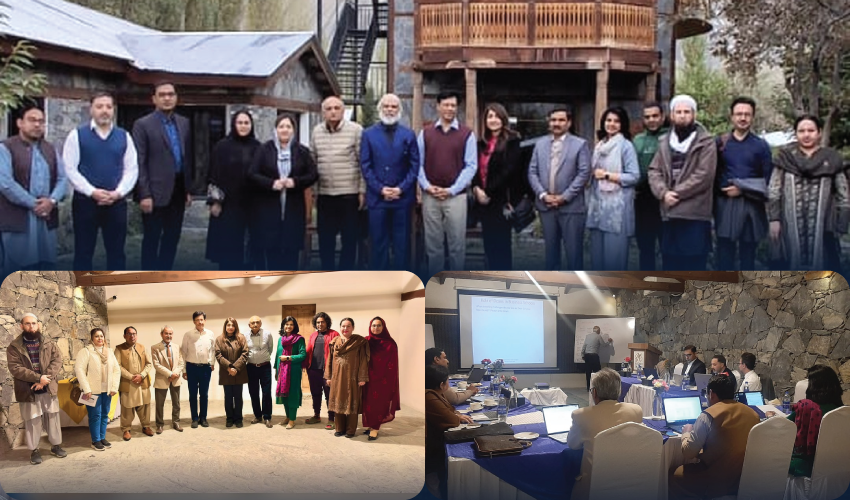
The National Business Education Accreditation Council, successfully organized a two-day executive development training program titled “Developing Ethical Leaders of Higher Education in the AI Era” on October 13 - 14, 2026, at PC Legacy, Skardu.
The training brought together senior academic leaders and administrators from higher education institutions to explore the evolving role of leadership in an era increasingly shaped by Artificial Intelligence. The program focused on the opportunities presented by AI in higher education as well as the ethical, governance and institutional challenges associated with its growing use in academic decision-making, teaching, research and administration.
The sessions were led by Dr. Zahoor Hassan Syed, Professor Emeritus, LUMS, and Dr. Jawad Syed, Professor, LUMS, who shared their insights on ethical leadership, institutional governance and responsible integration of AI within higher education institutions.
During the two-day program, participants engaged in discussions on the roles and responsibilities of higher education leaders in the AI era, evaluation of AI-related institutional opportunities and risks, and the importance of maintaining human oversight and transparency in AI-supported governance and decision-making processes.
The program also emphasized the need for higher education leaders to align technological advancement with institutional values, faculty and student development, stakeholder interests and responsible governance practices.
Senior academic leaders, including Vice Chancellors, Deans, Directors, Associate Deans, Heads of Departments, Department Chairs, senior faculty members and professionals involved in accreditation, quality assurance and institutional development participated in the training.
The training forms part of NBEAC’s continuing efforts to strengthen leadership and institutional capacity within Pakistan’s higher education sector and to facilitate informed dialogue on emerging developments affecting business education and higher education governance.
Powered by iCagenda
About NBEAC
NBEAC has three main functions: accreditation, training and networking. In its accreditation function, it develops and implements standards to improve the quality of business education in Pakistan. In its training function, it provides opportunities to faculty and managers to learn about quality standards and related matters. In its networking function, it provides a forum for business education professionals to learn from each other through conferences and seminars.